• About Me
  • Contact
  • What’s in a name?

dreamprayact

~ Reflections of a preacher, poet, and contemplative activist

dreamprayact

Category Archives: Sermon portions

Dancing in the Circle of God’s Care

07 Thursday Jun 2012

Posted by mark lloyd richardson in Sermon portions

≈ 12 Comments

Tags

Christianity, Circle dance, Community, divine-human relationship, faith, God, Holy Spirit, Jesus, Trinity

At a wedding reception Dallis and I attended, it was fun to watch the ways different people have of moving themselves around the dance floor – some with practiced grace and others with reckless abandon. But what impressed me the most was the number of times I saw people dancing in small circles – in groups of laughing, expressive joy!

The Christian faith celebrates the variety of ways we know God – God as Heavenly Parent, God as Beloved Son, God as Holy Spirit. The word Trinity does not appear in Scripture. But the Bible does portray three predominant ways in which we come to know who God is and what God is doing in the world – the Creator God, forming and shaping life; the Redeemer God, restoring life to its original intention; and the Sustainer God, continually breathing new life into all creation.

To know this Trinitarian God is a bit like getting up out of your chair and making your way to the dance floor, where you are invited to join a circle dance, a dance of relationship, in which you become part of the movement of grace, the stirring of joy, the music of the soul. One of the early church fathers, John of Damascus, even talked about the Trinity using the word perichoresis, which loosely translated from Greek means “circle dance.”

In the gospel of John, chapter 3, Jesus seems to say that the Spirit is not confined by our beliefs, our expectations, or our literalisms. The Spirit is like the wind – it “blows where it chooses, and you hear the sound of it, but you do not know where it comes from or where it goes” (3:8). To enter the Reigning of God, to be a part of what God is doing in the world, we must become free to live in the transformative Spirit of God.

The Spirit blows where it chooses, and just try to stop it. The Spirit may even blow through the lives of those who have lots of questions and can’t quite believe, or through the lives of persons of other religious traditions, or even through the lives of those who are antagonistic toward organized religion, because you see, no one can control the wind of the Spirit.

For many of us, this uncontrollable, unpredictable Spirit of God might come into our lives and upset our priorities. This Spirit might come as the wind and sweep away the prejudices we harbor. This Spirit might come as the dew and refresh us, giving us a new way of thinking about things. This Spirit might come as a fire and cause a great burning within us – a refining of our personal faith, a greater sense of urgency about living the gospel.

St. Augustine speaks of the Trinity in this way: “Now, love is of someone who loves, and something is loved with love. So then there are three: the lover, the beloved, and the love.”

A personal faith is a precious gift. It is a relationship formed within the very relationship of God’s Trinity … three expressions of the one God … a dynamic community defined by love.

Thanks be to God for the winds of the Spirit blowing freely, unpredictably, through our world today. Thanks be to the Triune God who draws us into relationship and invites us into the circle dance of life, abundant and free, where together we experience God’s care!

   Words and top photo (c) 2012 Mark Lloyd Richardson
Bottom photos (c) 2006 Dallis Day Richardson (Josh & Jenna’s wedding; Left: crazy nephew dancing, and Right: My Mom and me)
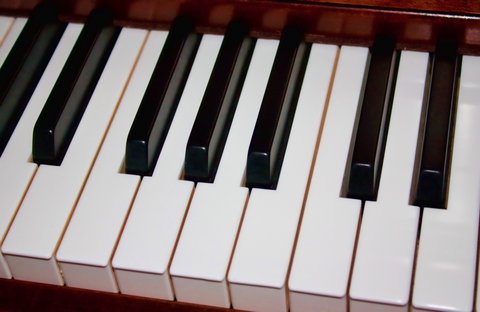

In Tune with the Song

16 Wednesday May 2012

Posted by mark lloyd richardson in Sermon portions

≈ 4 Comments

Tags

Christian life, faith, First Epistle of John, Great commandments, Music, Rob Bell, Song of life, spirit

Our experience of faith changes as we move through life. It changes as our understanding deepens and allows for more paradox in the fabric of faith. It changes as our eyes are opened to the truly bewildering gift life is and the astonishing lack of control we have over it.

In First John we read: “By this we know that we love the children of God, when we love God and obey his commandments. For the love of God is this, that we obey his commandments. And his commandments are not burdensome, for whatever is born of God conquers the world. And this is the victory that conquers the world, our faith.” (5:2-4)

God-inspired love reaches well beyond our comfort zones and natural boundaries to enable us to greet each person as an image of the Creator. Such love begins in simple obedience to the great commandments – loving God with all our hearts, souls, minds, and strength, and loving others as we love ourselves.

A few years ago Dallis and I stood in solidarity with a congregation that had publicly stated its inclusive stance toward all people, and was targeted by a hate-filled person as a result. Their pastor later visited him in county jail to tell him that the people of the church were willing to forgive. Sometimes love is not a happy feeling but rather a difficult choice to obey God’s commandment.

The Danish philosopher Soren Kierkegaard observed, “Christianity is not a doctrine to be taught, but a life to be lived.” Christ teaches us a new way to live, not all bottled up in our self-interest or personal comfort, but moving beyond ourselves to make a difference.

Nicole, a colleague of mine who recently launched a house church with four families, wrote a blog post about the experience of their first gathering. They began by viewing a teaching video by Rob Bell that makes a connection between the Christian life and music, suggesting that following God is about “being in tune with the song.”

Nicole writes, “Most all of us can connect to the idea that when we think of God we hear a song and following God is about learning to be in tune with the song. Jesus shows us what this looks like and following him through living as he did enables us to hear the song and be in tune with the song….

“This is especially important to me because over the years I have been struck by how often people will say they don’t know enough about God or the Bible and will discount their experience of faith, believing that without all the knowledge and background their faith and walk with God is less valid….

“Yet with music, all can enjoy the song…. Everyone can participate in the music and have a valid and real experience of it…. The faith journey is about learning to let go and hear the song, love the song, and live into the song as our text for the night says (John 4: 24, The Message): ‘God is sheer being itself – Spirit. Those who worship him must do it out of their very being, their spirits, their true selves, in adoration’” [Nicole Reilly, “House Church Reflection 051112,” othermodels.wordpress.com].

As followers of Jesus we pattern our lives after Christ. Our faith does not mean that we don’t meet opposition or trouble in our lives. Rather the Spirit of this Christ accompanies us even when we face challenges. As we listen faithfully and lovingly to the God who gives us new birth into a living hope we receive the strength to overcome.

When troubles come my way, it helps me to remember that God is at the Center. Then I sense the Spirit that is present in my breathing, the Light that refuses to go out in the darkness, the Beauty that bursts forth in unexpected places, the Love that holds me when I most need it, the Song that sings itself within me! I place my trust in these truths and it gives me courage.

Words (c) 2012 Mark Lloyd Richardson (from this past Sunday’s sermon)
Photos (c) 2012 Dallis Day Richardson

Because We Are, I Am

08 Tuesday May 2012

Posted by mark lloyd richardson in Peace with justice, Sermon portions

≈ 11 Comments

Tags

Abide in Christ, Body of Christ, compassion, forgiveness, Henri Nouwen, prayer, spirituality, vineyard

“Abide in me as I abide in you. Just as the branch cannot bear fruit by itself
unless it abides in the vine, neither can you unless you abide in me.” (John 15:4)

Vineyard near Santa MariaNot far from our home are row upon row of neatly planted grapevines climbing quietly toward the sun. Even from a distance it is clear that the hand of a vinedresser has touched them. Such simplicity of design does not come without long hours of meticulous labor.

Like these vineyards, our very existence depends upon One who plants and waters our lives. Our very survival depends upon One who knows how and when to prune, and which branches to remove. To see God as the Vinedresser is to relinquish absolute control of our lives, and to locate our lives within the wider landscape of God’s will.

So much depends upon our willingness to release our individual distinctiveness into the embrace of a community symbolized by a vineyard. The beloved community that Jesus calls forth is one that embodies an African proverb: Because we are, I am.

Just as the branches are intertwined on the vine, and it is difficult to trace individual branches from beginning to end, when we build trusting relationships through our shared devotion to Christ we are able to bear the fruit of grace and peace in our lives.

There are several ways that our lives abide in Christ, and one is practicing the art of forgiveness. Henri Nouwen writes, “Forgiveness means that I continually am willing to forgive the other person for not being God — for not fulfilling all my needs. I, too, must ask forgiveness for not being able to fulfill other people’s needs” [The Only Necessary Thing: Living a Prayerful Life, edited by Wendy Wilson Greer (New York: The Crossroad Publishing Company, 1999), p. 150].

As members of a faith community, we have high expectations of one another and only get a portion of what we want. So we must continually forgive ourselves, and one another. Even in our acknowledgment that none of us is God, we can celebrate the reflection of God in each other, the beautiful gifts we each bring to the table by God’s grace.

Another way we abide in Christ is by grounding our understanding of what it means to be the church in the biblical image of the body of Christ. Graham Standish, in his book Becoming a Blessed Church, writes, “In 1 Corinthians 12 Paul outlines a vision of the church as a living, breathing, acting body with Christ as its head. Too few churches hold onto that vision. The blessed church is the body of Christ that follows Christ’s guidance to feed, nourish, and care for itself in a way that allows it to grow and become a servant to the world” [Becoming a Blessed Church: Forming a Church of Spiritual Purpose, Presence, and Power (Herndon, Virginia: The Alban Institute, 2005), p. 22].

We also abide in Christ through prayer. Prayer is like the nervous system of a body. Prayer is the hopeful waiting for God. Prayer enables the head and the heart of the body to communicate. Prayer leads the praying congregation into the wisdom of Christ and helps it to discern Christ’s way, leaving the results to God.

Finally, practicing compassion helps us abide in Christ, through the ways that Jesus’ life reveals God’s boundless compassion for the world. Nouwen writes, “Our call to compassion is not a call to try to find God in the heart of the world but to find the world in the heart of God.” When we seek a deeper spirituality it leads us into solidarity with the suffering world.

Abiding in Christ is like being a living branch connected to the vine, and through the vine to the earth, and through the soil’s nutrients to the very Source of Life. God the vinedresser cares for the vines, prunes the branches, and does all that is necessary so that the plants bear the fruit of justice, compassion, and peace in the world. May it be so!

Grapevine near Santa Maria

Words (c) 2012 Mark Lloyd Richardson
Photos (c) 2012 Dallis Day Richardson

Let’s not talk about love

29 Sunday Apr 2012

Posted by mark lloyd richardson in Sermon portions

≈ 8 Comments

Tags

Christian, Clarence Jordan, First Epistle of John, grace, Jesus Christ, love, Soren Kierkegaard, truth

Mission tripOver 100 years ago, the Christian philosopher Soren Kierkegaard pointed out that Jesus was looking for followers, not admirers.

Jesus invites people to go with him into the world and to serve others in his name. Jesus calls people to an active form of believing, not a set of propositions. Jesus challenges people to believe in the power of God to repair what is broken in the world.

We encounter problems when we think that being Christian means believing a hundred impossible things before breakfast! Furthermore, we begin to think that perhaps we are not real Christians, never were, and cannot ever hope to be.

As First John states this dilemma, there are days when “our hearts condemn us” (3:20). There are days when we wonder if we are good enough to call ourselves Christian.

Thankfully, by a miracle of God’s grace, our hearts do not have the last word. As John says, “God is greater than our hearts, and he knows everything.”

God sees with a Father’s eyes of unconditional love the goodness that resides within our hearts, yearning to break free. God sees with a Mother’s eyes of unmerited grace the blessing we are when we are able to embrace the truth about ourselves. For in the end, it is truth, and only truth, that sets us free.

In his book Blue Like Jazz, Donald Miller writes, “There is a lie floating around that says I am supposed to be able to do life alone, without any help, without stopping to worship something bigger than myself. But I actually believe there is something bigger than me, and I need for there to be something bigger than me. I need someone to put awe inside me; I need to come second to someone who has everything figured out.”

That someone is Christ … the very One who meets us in worship and in life … the very One who invites sinners and outcasts to the banquet table … the very One who ushers us into the company of God.

Our best response to Christ is to live in the awareness of God’s Presence, to give thanks for the blessedness that follows us all the days of our lives, and to “love, not in word or speech, but in truth and action” (1 John 3:18).

We needn’t worry about whether we’re doing it right or not. We needn’t become self-critical about how we feel toward others – that we’re not getting that warm, fuzzy feeling. We just need to act in loving ways, leaving the feelings to sort themselves out.

John says we do this by laying down our life – that is, laying down our normal human inclination to live for ourselves only, laying it down at Christ’s feet, and then allowing God’s love to reorient us toward the needs of others.

Someone has called this our core competency as Christians … loving one another. Clarence Jordan captures the concrete practicality of this everyday love in his Cotton Patch Version of 1 John 3:18: “My little ones, let’s not talk about love. Let’s not sing about love. Let’s put love into action and make it real.”

Father Thomas Keating, in his book Invitation to Love, writes, “To love one another as Jesus loves us is to love one another in our humanness—in our individuality and opinionatedness, in personality conflicts and in unbearable situations. It is to continue to show love, no matter what the provocation may be to act otherwise.”

Jesus responded to human need around every corner, and expects his disciples to do the same – feeding the hungry, healing the sick, forgiving the sinner, loving the despised and forgotten ones of the world.

So, we throw our lot in with Jesus, the crucified and risen One! We see in his self-giving life and death, what love truly is. We practice that love through lives of integrity and grace. Most of all, we let Christ’s love grow within us so that our love is tangible and healing, and is true to the love Christ has for all people.

We move from admiration of Jesus to following him on the Way. We don’t merely talk about love, or sing about love. We put love into action, and make it real.

Words (c) 2012 Mark Lloyd Richardson
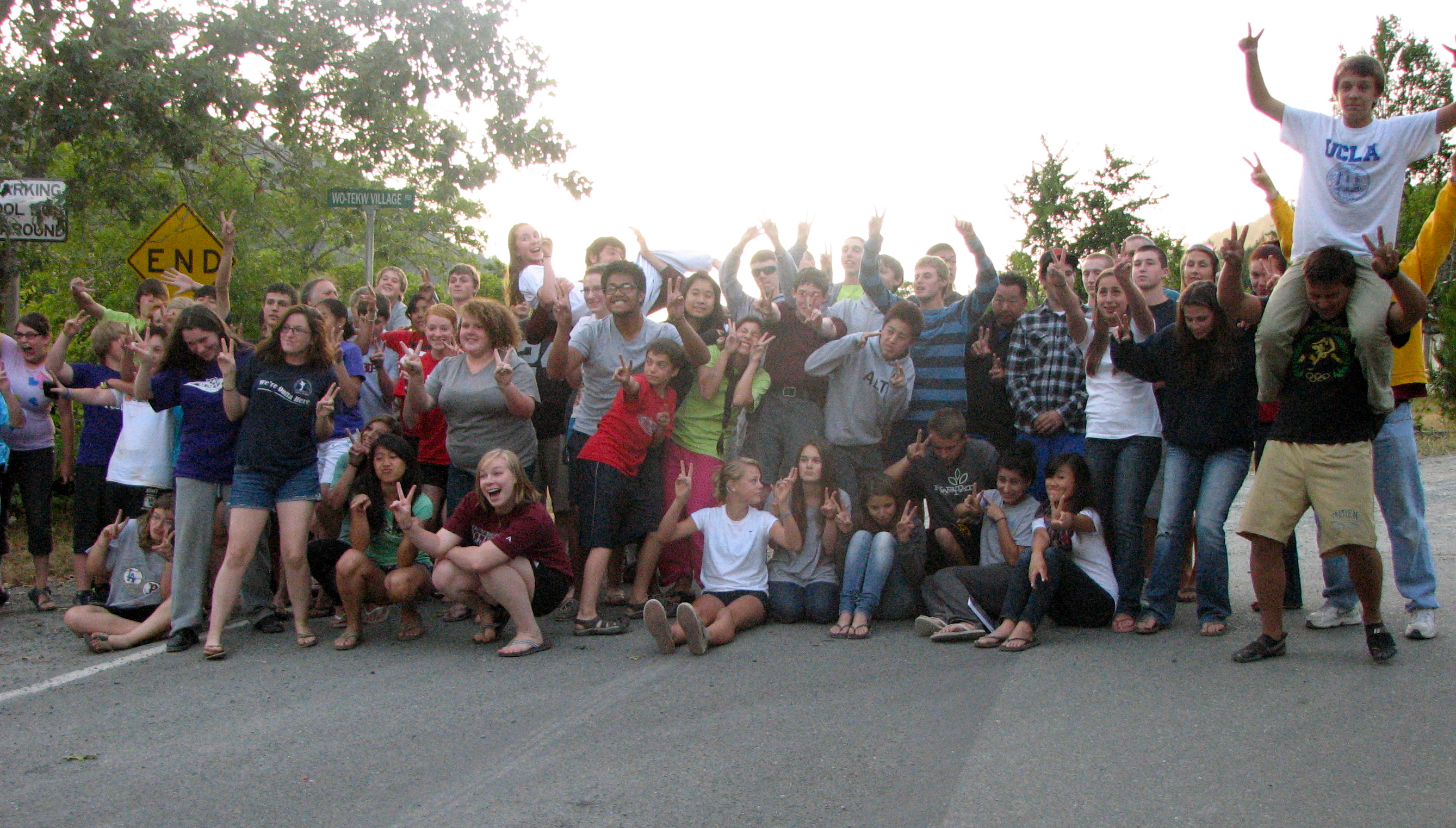
Photos of Sierra Service Project the summer of 2011 with sixty high school youth

I Did This For You

22 Sunday Apr 2012

Posted by mark lloyd richardson in Peace with justice, Sermon portions

≈ 12 Comments

Tags

Beatitude, care for the earth, children's art, Christ, Luke's Gospel, Matthew 5:3, peace, peacemaking

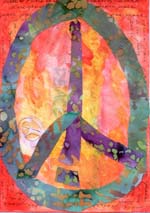
"Peace"In the 24th chapter of the gospel of Luke, the disciples are gathered in Jerusalem and are talking about the empty tomb, and about the encounter two of them had on a road to Emmaus with someone they only recognized as Jesus after he took bread, blessed and broke it. As they are talking, Jesus himself stands among them and says to them, “Peace be with you.”

The risen Jesus offers the frightened disciples peace. He also offers them his hands and feet, so that they might touch and see. Perhaps on this night as Jesus stands among them, the disciples understand what the scriptures say about him for the first time.

It is to us, as much as to these early disciples, that the risen Jesus utters the words: “Peace be with you.” As recipients of the peace of Christ, we are called to take up a new identity and a new calling. Having received the gift of peace we are to become peacemakers.

It is no easy thing to be a peacemaker, especially in a world that seems constantly to pit people against one another, to highlight our differences over our shared humanity. It is no easy thing to be a peacemaker in a world dominated by self-interest, power struggles, and a disregard for the environment.

"world peace"To put it simply, being peacemakers means valuing others for who they are – children of God – and not looking upon anyone else as less than human just because they have views or values contrary to your own. Being peacemakers also means taking care of the earth, simplifying our lifestyles so as to use no more natural resources than we need, and protecting the ecosystems on which all life depends. All of this is making peace with the home God provides us.

We are all artists. Someone has explained this truth by saying that life is the medium and we are the canvas. Our task is to creatively work at making our lives a thing of beauty, molding and shaping the person we are becoming in the sight of God. That is our work, our calling as peacemakers.

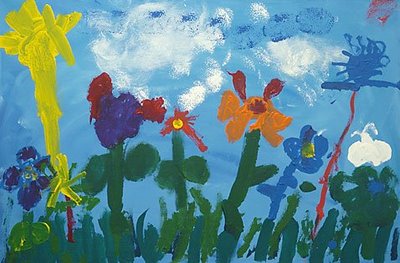
Aimee, like other children of preschool age, would often come home with a drawing or other piece of art. Next to her own name she’d scrawl the name of someone she loved – usually Mommy or Daddy, sometimes baby brother Ben. As she presented her picture, she’d say proudly, “I did this for you.”

"Children's art"What if we were to take seriously the apostle Paul’s admonition, “Whatever you do … do it all in the name of the Lord Jesus” (Col. 3:17)?

What if our lives bore the marks of the Prince of Peace?

What if, as we went about our daily lives, the words of the Beatitudes played quietly in the background: “Blessed are the poor in spirit, the gentle ones, the merciful, the pure in heart, the ones who work for peace?”

What if, at the end of the day, we were able to present our lives to God and say, “I did this for you?”

Perhaps then our lives would be worthy of the artist in each of us. Our lives would truly be things of beauty, a source of joy in the heart of God!

(This is a portion of today’s sermon, “Witnesses to Peace,” preached at the First United Methodist Church of Santa Maria, California.)

Newer posts →
January 2026
S M T W T F S
 123
45678910
11121314151617
18192021222324
25262728293031
« Oct    

Recent Posts

  • A Familiar Peace
  • At Day’s End
  • How Grace Comes
  • A Blessing for Immigrants
  • Now the Work of Christmas Begins

Enter your email address to follow this blog and receive notifications of new posts by email.

Join 356 other subscribers

Archives

  • October 2025
  • August 2025
  • July 2025
  • June 2025
  • December 2024
  • August 2024
  • June 2024
  • May 2024
  • April 2024
  • July 2023
  • August 2022
  • May 2022
  • September 2021
  • August 2021
  • July 2021
  • June 2021
  • April 2021
  • March 2021
  • February 2021
  • March 2020
  • December 2019
  • September 2019
  • August 2019
  • May 2019
  • February 2019
  • October 2018
  • August 2018
  • June 2018
  • May 2018
  • April 2018
  • February 2018
  • October 2017
  • August 2017
  • July 2017
  • May 2017
  • April 2017
  • December 2016
  • November 2016
  • May 2016
  • April 2016
  • March 2016
  • February 2016
  • January 2016
  • December 2015
  • November 2015
  • October 2015
  • September 2015
  • August 2015
  • July 2015
  • May 2015
  • February 2015
  • January 2015
  • December 2014
  • November 2014
  • October 2014
  • September 2014
  • August 2014
  • July 2014
  • June 2014
  • May 2014
  • March 2014
  • February 2014
  • January 2014
  • December 2013
  • November 2013
  • October 2013
  • September 2013
  • August 2013
  • July 2013
  • June 2013
  • May 2013
  • April 2013
  • March 2013
  • February 2013
  • January 2013
  • December 2012
  • November 2012
  • October 2012
  • September 2012
  • August 2012
  • July 2012
  • June 2012
  • May 2012
  • April 2012
  • March 2012
  • February 2012
  • January 2012

Categories

  • Blessings
  • Centering Prayer
  • Contemplative Life
  • Dogs
  • grief
  • Guest Blogs
  • Justice
  • LGBTQ
  • pastoral integrity
  • Peace with justice
  • Poems
  • Prayers
  • Reflections
  • Running
  • Sermon portions
  • Uncategorized
  • Worship Liturgy

Blog Stats

  • 58,974 hits

Meta

  • Create account
  • Log in
  • Entries feed
  • Comments feed
  • WordPress.com

Sacred Pauses

aprilyamasaki.com

Blog at WordPress.com.

  • Subscribe Subscribed
    • dreamprayact
    • Join 356 other subscribers
    • Already have a WordPress.com account? Log in now.
    • dreamprayact
    • Subscribe Subscribed
    • Sign up
    • Log in
    • Report this content
    • View site in Reader
    • Manage subscriptions
    • Collapse this bar
 

Loading Comments...