• About Me
  • Contact
  • What’s in a name?

dreamprayact

~ Reflections of a preacher, poet, and contemplative activist

dreamprayact

Tag Archives: Jesus

Prayer Changes Me

20 Thursday Jun 2013

Posted by mark lloyd richardson in Prayers, Worship Liturgy

≈ Leave a comment

Tags

C.S. Lewis, fears, Gerasene demoniac, Gospel of Luke, Healing prayer, Jesus, Luke 8:26-39, personal change, power of prayer, restlessness, Revised Common Lectionary, spiritual wholeness

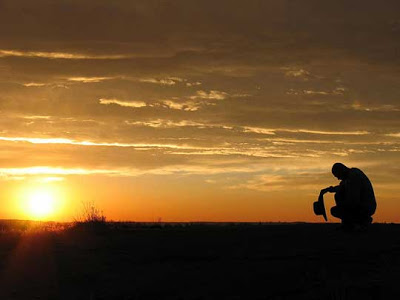
prayer-virtuous-pagans

C.S. Lewis once wrote, “I pray because I can’t help myself. I pray because I’m helpless. I pray because the need flows out of me all the time, waking and sleeping. It doesn’t change God. It changes me.”

Here’s a prayer inspired by the miracle story of Jesus’ encounter with the “Gerasene demoniac” in Luke 8:26-39 (Gospel Reading for Proper 7, Year C, Revised Common Lectionary).

Healing Lord,
in this world of disconnection and disrepair,
in which we often walk past each other’s pain,
you come among us as a calming presence.

At times our very identities are at risk
and we feel disoriented by waves of change.
Yet you do not remain at a distance.
You come near to reassure and remind us
that our lives are formed within your love
from which we can never be separated.

Each of us faces our own demons.
We are threatened by troubles within and trials without.
The loneliness of isolation continues to plague us.

Then your voice reaches through our restlessness,
your powerful presence casts out our fears –
rescuing us from our addictions,
releasing us from our anxieties,
reclaiming us from our wounds.

We are made whole again,
we are unbound and set free,
we are changed!

Words (c) 2013 Mark Lloyd Richardson

Mystery and Community

26 Sunday May 2013

Posted by mark lloyd richardson in Reflections, Sermon portions

≈ 6 Comments

Tags

Brennan Manning, Community, God, Holy Spirit, Jesus, Love of Christ, Mystery, theology, Trinity, truth

Vermont Countryside

Here is a small portion of my sermon today on the Trinity.

Christians, of all people, ought to have an expansive view of God.  We, of all people, ought not to be trying to put God in a box.  Even the revered theological concept of the Trinity can do that.  Unless we see it for the mystery that it is, our doctrine can become a straightjacket in which God is neatly wrapped up by our small minds.

In speaking of the mystery of the Trinity the closest comparison may be the mystery of community.  When a group of people becomes a community – when they risk sharing their questions, their sorrows, their dreams, and their hopes with one another, and when they do not hide their true selves, warts and all, from one another – then they are known for who they are.  They become part of one another, just as the risen Christ is said to be one with God the Father/Mother and God the Spirit.

This is indeed the mystery, how the triune God draws all of creation into a dance where the melody of Christ’s love unites them in the Spirit.  Some say unity can only occur when people conform to a prescribed set of beliefs.  But God says no – unity is available to those who have open minds, open hearts, and open spirits to what the Spirit is saying in our day.

Each Sabbath, we gather in worship where the community of God meets our human community.  We give thanks for the Spirit of truth that guides us into all truth – the truth about ourselves, the truth about our world, the truth about God’s ways in the world.

We celebrate the self-giving love of Jesus of Nazareth who willingly laid down his life because he had been drawn so completely into God’s vision of reconciliation and peace.

We bless the Spirit who is the breath of life, the source of love, the ground of all being.

We seek to match our beliefs to our actions in Christ-like fashion by being a voice for those on the margins of life, by being instruments of peace in a violent, war-torn world, by being open to the truth, and by embracing the higher calling of self-giving love.

The mystery and community of the Trinity invites us into an expansive view of God, calls us to justice-seeking and peacemaking, and unites us in one faith, one baptism, one Spirit, and one Lord, so that we may live for God.

A prayer by the late Brennan Manning speaks of how we meet this triune God:

“May all of your expectations be frustrated,
May all of your plans be thwarted,
May all of your desires be withered into nothingness,
that you may experience the powerlessness and poverty of a child,
and can only sing and dance in the love of God,
Who is Father, Son and Holy Spirit.”

Words and photo (c) 2013 Mark Lloyd Richardson

Fasting and Feasting

18 Monday Feb 2013

Posted by mark lloyd richardson in Reflections, Sermon portions

≈ 8 Comments

Tags

blessing, Communion, compassion, desert wilderness, fasting, feasting, God's mission, grace, Jesus, justice, Lent, meister eckhart, sabbath, spirit, spiritual journey

548640866fA pear seed grows up into a pear tree,
a nut seed grows up into a nut tree–
but a seed of God grows into God, to God.
~ Meister Eckhart

Lent is an invitation to reflect on our faith experience, a time to delve more deeply into the spiritual meaning of our lives. We study the life and ministry of Jesus for clues about the will of God and the work of the Spirit in the world. We seek fresh insight into the basic patterns of the Christian life – prayer, worship, reading Scripture, and giving our selves as servants of Christ.

During this 40-day period, we begin with ashes and commit to a discipline that we believe will ultimately be resurrecting! It may involve fasting from certain foods or activities. But it will certainly involve feasting as we gather on the Sabbath and receive the bread and cup of communion with Christ as nourishment for this spiritual journey.

We have an opportunity in these forty days to renew the commitment of our way to Christ. This is our chance to put our faith into practice in new ways. This is a time set aside for us to “grow into God, to God.”

A short piece from the curriculum The Whole People of God provides an opening for us to choose how we will use this holy season. We are invited to…

Fast from pessimism, and feast on optimism.

Fast from criticism, and feast on praise.

Fast from self-pity, and feast on joy.

Fast from bitterness, and feast on forgiveness.

Fast from idle gossip, and feast on purposeful silence.

Fast from jealousy, and feast on love.

Fast from discouragement, and feast on appreciation.

Fast from complaining, and feast on hope.

Fast from selfishness, and feast on service.

Fast from fear, and feast on faith.

Fast from anger, and feast on patience.

Fast from self-concern, and feast on compassion for others.

Fast from discontent, and feast on gratitude.

Fasting and feasting – not just for the experience, but for the same reasons Jesus was led into the wilderness by the Spirit following his baptism by John. Jesus was preparing for the saving mission of a loving God – the mission of restoring creation, the human family, the sick, the lonely and isolated, the marginalized and vulnerable, back into the truth of who they are, beloved ones made in God’s own image!

Just as Jesus was baptized and given a blessing, and then sent into the wilderness to contemplate that blessing, so it is for us. You and I – Christ’s body on earth – have a mission, to share God’s gracious love and resurrecting hope in every possible way!

The season of Lent calls us to choose: Choose life! Choose grace! Choose compassion! Choose justice! Choose blessing! In the desert experience of Lent, may God grant us to the grace to grow in wisdom and in love. In the wilderness of this holy season, may God lead us along the resurrection road to a place called hope.

What is your commitment this Lent? What do you choose to do or not do as a way to move toward the Center of this human adventure where we meet God?

Words (c) 2013 Mark Lloyd Richardson

 

Will you welcome the little one?

20 Thursday Dec 2012

Posted by mark lloyd richardson in Poems, Reflections

≈ 8 Comments

Tags

Bethlehem, children, Christmas, compassion, Jesus, peace, suffering, violence

"Bethlehem at night," Flickr photo by Nancie Sill taken on January 17, 2011. Used by permission.

“Bethlehem at night,” Photo by Nancie Sill taken January 17, 2011. Used by permission.

Life is a sacred gift, and all the world’s children deserve to grow up in safety and security surrounded by love. Sadly, far too many children fall victim to the violence of poverty, food insecurity, war, civil unrest, human trafficking, sexual predation, gun violence, and more. Yet these are all our children. The human family is one family in spite of all the forces at work to tear it apart. As Christians reflect upon a child who came into this world to bring peace, we must ask ourselves if we are ready to welcome all the vulnerable ones of this world into our consciousness. For it is only in opening our hearts to the suffering of the little ones that we prepare our hearts to receive the gift of this holy child we await at Christmas.

Will You Welcome the Little One?

Bethlehem…city of David…
will you welcome the little one?

Give me reason to believe
you will protect the holy child –
the holy in all children – from harm.

Amid all the bad news –
economic woes
political corruption
a planet willfully plundered
wars and rumors of wars –
take care to use your humanity
fragile as it is
to ease the world’s pain.

O Bethlehem, open your eyes
to the holy one born among us.

Make room in your hearts
for this one who comes
as compassionate healer
justice teacher
abundant life giver
prince of peace.

Brother, Sister, Friend,
will you welcome the little one
sent from God?

Words (c) 2008 Mark Lloyd Richardson

Different Roads

08 Saturday Dec 2012

Posted by mark lloyd richardson in Reflections

≈ 38 Comments

Tags

compassion, Dalai Lama, faith traditions, gospels, Jesus, Marcus Borg, Religious pluralism, salvation, spirituality

63880_456334967737818_2081127342_nOn Facebook recently I posted this quote from the Dalai Lama and commented that I wish more Christians believed this about people of other faith traditions. I agree with something Bishop John Shelby Spong said: “God is not a Christian. God is not a Jew or a Muslim or a Hindu or a Buddhist. I honor my tradition. I walk through my tradition. But I don’t believe my tradition defines God. It only points me to God.”

After posting the above photo a friend commented, “Jesus answered, ‘I am the way and the truth and the life. No one comes to the Father except through me’” (John 14:6). This friend considers this a definitive statement with no ambiguity. Another Facebook friend, my niece Kaitlynn, agreed that “God speaks very clearly through scripture and specifically in John 14:6 about how to be reconciled and receive salvation.” She didn’t see any other way to interpret that verse.

Facebook is many things, but perhaps it is not the best place to carry on a theological dialogue! However, because I want my Facebook friends (and relatives) to know that I respect and care about them, I offered the following response:

For me following Jesus is about trying to see the world through his eyes of mercy and relating to others with compassion more than it is about adhering to a particular set of beliefs. I believe in Jesus – it’s just that I don’t think my belief saves me. Christians often confuse faith and a faithful life with belief. I think of faith as trust in God. To confess “Jesus saves” is to acknowledge that we are not saved by a creed, a set of spiritual laws, or a particular view of scripture. We enter salvation by placing our ultimate trust in the Source of our life and Ground of our being. Nor are we saved so that we can personally enjoy a happy eternal future. Our lives are saved from meaninglessness and self-centeredness and saved for the purpose of living for God and loving the world that God loves.

The early Christian movement of the first few centuries was all about taking care of one another, showing radical hospitality to strangers, and being a countercultural witness of the power of God. God is much bigger than the Bible, and Jesus’ message of salvation goes way beyond individual concerns to address the whole of God’s creation and all the systems that we take for granted that have nothing whatsoever in common with God’s kingdom or Jesus’ way.

The gospels are human documents written decades after Jesus’ death expressing how particular evangelists understood Jesus. The gospels are not verbatim transcripts of historical events so much as they are stories of how the pre-Easter Jesus changed peoples’ lives and how the post-Easter Jesus continued to reveal the nature of God’s power in the world – the power of self-giving love and unconditional acceptance. They are meant to point us to the God of Jesus, the God in Jesus. The goal of the evangelists was to have their hearers receive the good news and permit God’s grace and power to transform their lives, and through them to transform their world.

The gospel of John includes many “I am” statements on the lips of Jesus. Jesus claims to be true bread, a gate, a good shepherd, the vine, and the light of the world, and I affirm by faith the truth in these claims. But they are metaphors, not statements of literal fact. In many ways they speak of a mystical relationship that exists through faith, which itself is a gift from God, lest anyone should boast.

So … I choose to see the Christ of the gospels as someone whose love embraces the whole of humanity and all of creation, and that choice moves me beyond self-interest in my own personal future to seek to embrace the whole world that is loved by God.

In this religiously pluralistic world, where people of many traditions seek the sacred and long to know God, I am helped by something New Testament scholar Marcus Borg wrote in his book The Heart of Christianity: “To say ‘Jesus is the only way’ is also the language of devotion. It is the language of gratitude and love. It is like language used by lovers, as when we say to our beloved, ‘You’re the most beautiful person in the world.’ Literally? Most beautiful? Really? Such language is the poetry of devotion and the hyperbole of the heart, but it is not doctrine. . . . [He concludes,] We can sing our love songs to Jesus with wild abandon without needing to demean other religions.”

Again, I respect those who don’t share my views, and I in no way question your faith or devotion to Jesus. I too seek to follow Jesus in my life, and my spiritual path has led me to see the meaning of faith in a different light. I trust we can still be friends.

Words (c) 2012 Mark Lloyd Richardson

God of holy surprises

30 Friday Nov 2012

Posted by mark lloyd richardson in Prayers, Reflections, Worship Liturgy

≈ 8 Comments

Tags

Advent, Body of Christ, Communion prayer, Eucharist, grace, Holy Communion, Jesus, Liturgical seasons, Second Coming of Christ

Change-the-worldThe season of Advent begins the liturgical year for the Christian Church. It is a time of inward reflection and anticipation of the coming of Christ — in the birth of Jesus, in the spiritual rebirth of Christian believers, and in the return of the Messiah in glory at a time no one can know or foresee.

“Prepare” is a central idea of this season! Prepare to be surprised by God. Prepare to open your life to divine inspiration. Prepare to listen to the stirring of the Spirit in the ordinary moments of each day. Prepare to see the glory of the coming of the Lord. Prepare for something new to break into the world!

In the Christian tradition we celebrate a meal called Holy Communion. Another term we use is Eucharist, the root meaning of which is to rejoice or show gratitude for the gifts of God.

Here is a Eucharistic Prayer I wrote for the season of Advent:

God of holy surprises,
whose dreams encircle the world,
whose wisdom enlightens creation,
whose love enthralls humankind,
be with us in this season of watching and waiting.

We are a people living in exile
in a land blinded by material comfort,
corporate greed, and military might.

We are a people living in spiritual exile
in an age confronted by rigid beliefs,
increasing intolerance, and growing unkindness.

We long for you to tear open the heavens and come down,
so that the mountains quake
and nations tremble at your presence.                                                Isaiah 64:1-2

We long for you to come at an hour or day no one knows,
and to find us awake to the possibilities your Spirit unfolds.

In the fullness of time your Son Jesus
lived and ministered upon this troubled earth –
forgiving sins,
healing broken bodies, minds and hearts,
challenging the powers that strangle and bind,
eating and drinking with sinners and friends,
loving people of every description,
walking the lonely road of authentic love.

He blessed and shared many a meal
as signs of how sacred ordinary life is.

He shared bread as his body, broken for all.
He shared wine as his blood, poured out for all.

In the fullness of time your Son Jesus gave his life,
because it is our lives – first given to us –
that are ours alone to give.

Pour out your Spirit, we pray, on us gathered here.
May we taste the sweetness of your presence.
May we be changed by the gift of your grace.
May we go from this place to be the body of Christ,
redeemed and sent out to heal and transform the world.  Amen.

Words (c) 2002 Mark Lloyd Richardson

For the needy shall not always be forgotten

18 Monday Jun 2012

Posted by mark lloyd richardson in Reflections

≈ 6 Comments

Tags

Christian Scripture, covenant, Creator God, Guatemala, hope, Jesus, Poverty, Psalm

“For the needy shall not always be forgotten, nor the hope of the poor perish forever.” Psalm 9:18

It is impossible to escape God’s concern for the poor and needy in Christian Scripture. Read the law, the prophets, the psalms, the gospels and letters, and Divine concern for the least among us is everywhere in abundance.

The people in covenant with God are expected to live in ways that honor and care for the most vulnerable among them – widows, orphans, aliens – and so fulfill the law’s requirements for “right relationship.”

Likewise, the early church is essentially a community of caring that practices the lifestyle of their Teacher and Lord by sharing what they have with one another, be it much or little, and in so doing Christ’s presence becomes real to them.

When we remember the poor and the needy we are remembering the promise of God to live among us and be our God. We are remembering that we too are poor, we too are needy, only in different ways. We are remembering that hope cannot be bought or sold – it is given by the One who is “a stronghold for the oppressed, a stronghold in times of trouble” (Ps. 9:9).

Hope often arrives through the instruments of human hands and hearts moved by God’s concern. Hope comes in the forms of meeting tangible human needs and advocating for societal responsibility for the least among us. Hope is frequently expressed by challenging oppressive economic practices and skewed governmental priorities that reward the powerful and leave the poor with fewer and fewer resources.

Scripture is not only a comfort, it is a challenge – a challenge to live a life attuned to God’s concern and so fulfill our highest calling as ones made in the image of our Creator.

Words (c) 2012 Mark Lloyd Richardson
Photo (c) 2012 Hannah Kelsey Richardson (children in Guatemala)

Dancing in the Circle of God’s Care

07 Thursday Jun 2012

Posted by mark lloyd richardson in Sermon portions

≈ 12 Comments

Tags

Christianity, Circle dance, Community, divine-human relationship, faith, God, Holy Spirit, Jesus, Trinity

At a wedding reception Dallis and I attended, it was fun to watch the ways different people have of moving themselves around the dance floor – some with practiced grace and others with reckless abandon. But what impressed me the most was the number of times I saw people dancing in small circles – in groups of laughing, expressive joy!

The Christian faith celebrates the variety of ways we know God – God as Heavenly Parent, God as Beloved Son, God as Holy Spirit. The word Trinity does not appear in Scripture. But the Bible does portray three predominant ways in which we come to know who God is and what God is doing in the world – the Creator God, forming and shaping life; the Redeemer God, restoring life to its original intention; and the Sustainer God, continually breathing new life into all creation.

To know this Trinitarian God is a bit like getting up out of your chair and making your way to the dance floor, where you are invited to join a circle dance, a dance of relationship, in which you become part of the movement of grace, the stirring of joy, the music of the soul. One of the early church fathers, John of Damascus, even talked about the Trinity using the word perichoresis, which loosely translated from Greek means “circle dance.”

In the gospel of John, chapter 3, Jesus seems to say that the Spirit is not confined by our beliefs, our expectations, or our literalisms. The Spirit is like the wind – it “blows where it chooses, and you hear the sound of it, but you do not know where it comes from or where it goes” (3:8). To enter the Reigning of God, to be a part of what God is doing in the world, we must become free to live in the transformative Spirit of God.

The Spirit blows where it chooses, and just try to stop it. The Spirit may even blow through the lives of those who have lots of questions and can’t quite believe, or through the lives of persons of other religious traditions, or even through the lives of those who are antagonistic toward organized religion, because you see, no one can control the wind of the Spirit.

For many of us, this uncontrollable, unpredictable Spirit of God might come into our lives and upset our priorities. This Spirit might come as the wind and sweep away the prejudices we harbor. This Spirit might come as the dew and refresh us, giving us a new way of thinking about things. This Spirit might come as a fire and cause a great burning within us – a refining of our personal faith, a greater sense of urgency about living the gospel.

St. Augustine speaks of the Trinity in this way: “Now, love is of someone who loves, and something is loved with love. So then there are three: the lover, the beloved, and the love.”

A personal faith is a precious gift. It is a relationship formed within the very relationship of God’s Trinity … three expressions of the one God … a dynamic community defined by love.

Thanks be to God for the winds of the Spirit blowing freely, unpredictably, through our world today. Thanks be to the Triune God who draws us into relationship and invites us into the circle dance of life, abundant and free, where together we experience God’s care!

   Words and top photo (c) 2012 Mark Lloyd Richardson
Bottom photos (c) 2006 Dallis Day Richardson (Josh & Jenna’s wedding; Left: crazy nephew dancing, and Right: My Mom and me)

Be the Blessing

21 Monday May 2012

Posted by mark lloyd richardson in Reflections

≈ 19 Comments

Tags

Ascension of Jesus, blessing, Christian faith, Easter, Jesus, Least of these

Jesus said, “I am sending upon you what my Father promised; so stay here in the city until you have been clothed with power from on high.” Then he led them out as far as Bethany, and, lifting up his hands, he blessed them. While he was blessing them, he withdrew from them and was carried up into heaven. ~ Luke 24:49-51

This is the Gospel account of the ascension of Jesus, which is celebrated in Christian tradition late in the Easter season. I find meaning in this story in that Jesus’ blessing happens in the midst of his letting go of the very ones he loves – his friends who seek to know and honor God through their lives.

The truth is, Jesus blessed people from all walks of life. He blessed the sick, the young, the hungry, the forgotten, the stranger, the oppressed, and the vulnerable of this world.

Jesus blessed the earth and all it creatures by living into the fullness of the Creator God, the One who knows when even a tiny sparrow falls to the earth.

Jesus blessed the Samaritan, the Jew, and the Gentile. Jesus blessed male and female, young and old, poor and rich.

Isn’t it strange that the Christian faith has so often been used to draw lines between the ones who are “In” and the ones who are “Out?”

Isn’t it strange that Jesus’ life was all about showing people the way to God, and yet so many people use Jesus as an excuse to tell others where they are going wrong?

Jesus blessed “the least of these,” our sisters and brothers. He didn’t ask qualifying questions first, like, what church do you attend, or what are your political views, or do you abide by all the commandments. He didn’t ask about income, education, marital status, or sexuality.

Jesus spread God’s blessing around like there was no tomorrow! He brought healing to broken bodies. He offered forgiveness to dispirited people. He fed the hungry, prayed for the sick and dying, and demonstrated through his very life that God loves us and wants to create God’s Realm within us and through us!

Wouldn’t it be great if people of all faiths embraced the universality of God’s blessing?

Wouldn’t it be great if we understood that God’s blessing is not restricted to any one spiritual path or religion, and that God is God and we are not?

Wouldn’t it be great if our first thought each morning was to imagine where God was calling us to be a blessing through our words and deeds that day?

Then we would see the beginnings of the peaceful Reigning of God on earth!

Words (c) 2012 Mark Lloyd Richardson

Reaching Out

13 Friday Apr 2012

Posted by mark lloyd richardson in Poems, Uncategorized

≈ 4 Comments

Tags

believe, doubt, healing, home, Jesus, joy, Thomas

Have you seen Jesus?
I’ve been looking for him.
I met him as a child.
He was rugged
but he liked to hold children on his lap.
He smiled and laughed a lot.
He was the kindest friend imaginable.

Sometimes when I felt sad or alone
I would pray –
“Hi Jesus. It’s me. Remember me?”
He always did.
Then the tears running warm down my face
made me feel like I was alive again and not dead,
like I was found and no longer lost.

I’m not a boy anymore.
Life has become way more complicated.
There never seems to be enough time.
And I get tired from the grind.
I only wish I still had time to stop
and consider the lilies.

~            ~            ~

Thomas wasn’t there on the first day of the week –
the day Jesus came and stood among the disciples
behind their closed doors of fear.
Thomas didn’t hear the words of peace
or see the Lord’s wounded hands or side.
How could he know for sure that the Lord had even been there,
though the others assured him?

Oh, how he missed Jesus –
the ache was almost unbearable.

Seven long days later – what felt like an eternity –
they were gathered again in the same room.
This time Thomas was there,
though his heart did not possess the others’ joy.

Again Jesus came and stood among them.

Jesus said to Thomas,
“Put your finger here and see my hands.
Reach out your hand and put it in my side.
Do not doubt but believe.” (John 20:27)

Thomas reached out,
and in his reaching out
his heart flooded with memories –
meals for hungry crowds,
the Master’s voice teaching,
miracles of healing,
offers of forgiveness,
walking the dirt roads of Galilee and Judea,
reclining by each table with its bread and wine,
praying for the kingdom to come.

“My Lord and my God!” Thomas nearly shouted,
his heart bursting with rediscovered joy.
It was like being alive again after feeling so dead inside,
like being found,
like coming home.

Words (c) 2012 Mark Lloyd Richardson

Newer posts →
December 2025
S M T W T F S
 123456
78910111213
14151617181920
21222324252627
28293031  
« Oct    

Recent Posts

  • A Familiar Peace
  • At Day’s End
  • How Grace Comes
  • A Blessing for Immigrants
  • Now the Work of Christmas Begins

Enter your email address to follow this blog and receive notifications of new posts by email.

Join 356 other subscribers

Archives

  • October 2025
  • August 2025
  • July 2025
  • June 2025
  • December 2024
  • August 2024
  • June 2024
  • May 2024
  • April 2024
  • July 2023
  • August 2022
  • May 2022
  • September 2021
  • August 2021
  • July 2021
  • June 2021
  • April 2021
  • March 2021
  • February 2021
  • March 2020
  • December 2019
  • September 2019
  • August 2019
  • May 2019
  • February 2019
  • October 2018
  • August 2018
  • June 2018
  • May 2018
  • April 2018
  • February 2018
  • October 2017
  • August 2017
  • July 2017
  • May 2017
  • April 2017
  • December 2016
  • November 2016
  • May 2016
  • April 2016
  • March 2016
  • February 2016
  • January 2016
  • December 2015
  • November 2015
  • October 2015
  • September 2015
  • August 2015
  • July 2015
  • May 2015
  • February 2015
  • January 2015
  • December 2014
  • November 2014
  • October 2014
  • September 2014
  • August 2014
  • July 2014
  • June 2014
  • May 2014
  • March 2014
  • February 2014
  • January 2014
  • December 2013
  • November 2013
  • October 2013
  • September 2013
  • August 2013
  • July 2013
  • June 2013
  • May 2013
  • April 2013
  • March 2013
  • February 2013
  • January 2013
  • December 2012
  • November 2012
  • October 2012
  • September 2012
  • August 2012
  • July 2012
  • June 2012
  • May 2012
  • April 2012
  • March 2012
  • February 2012
  • January 2012

Categories

  • Blessings
  • Centering Prayer
  • Contemplative Life
  • Dogs
  • grief
  • Guest Blogs
  • Justice
  • LGBTQ
  • pastoral integrity
  • Peace with justice
  • Poems
  • Prayers
  • Reflections
  • Running
  • Sermon portions
  • Uncategorized
  • Worship Liturgy

Blog Stats

  • 58,810 hits

Meta

  • Create account
  • Log in
  • Entries feed
  • Comments feed
  • WordPress.com

Sacred Pauses

aprilyamasaki.com

Blog at WordPress.com.

  • Subscribe Subscribed
    • dreamprayact
    • Join 356 other subscribers
    • Already have a WordPress.com account? Log in now.
    • dreamprayact
    • Subscribe Subscribed
    • Sign up
    • Log in
    • Report this content
    • View site in Reader
    • Manage subscriptions
    • Collapse this bar
 

Loading Comments...