(Interestingly, with the exception of indigenous native people, we all belong to one of the many streams of immigrants to this land)
We have in recent days witnessed the brutal tactics of ICE agents as they terrorize immigrants in the midst of normal daily activities, often detaining and removing them from their families in broad daylight. As I thought about the fear and confusion brought on by this state of affairs, I was moved to remind us of the sacred place the scriptures give to the stranger, the alien, the foreigner in our midst:
“Do not mistreat or oppress a foreigner, for you were once a foreigner in a strange land.” ~ Exodus 22:21
“The foreigner residing among you must be treated as your native-born. Love them as yourself, for you were foreigners in Egypt. I am the Lord your God.” ~ Leviticus 19:34
“For I was hungry, and you gave me food. I was thirsty, and you gave me drink. I was a stranger, and you welcomed me.” ~ Matthew 25:35
Then I penned the following blessing for my immigrant neighbors:
Bless the immigrants who play by the rules, who want only to provide for their families, who work hard in jobs most of us are not willing to do, who pay taxes, who contribute to the strength of our communities, who give love and laughter to their families and friends, who seek only to live in peace.
Bless the immigrants who fear daily for their safety, who become scapegoats for larger societal issues, who suffer the abuse of malignant policies and leaders, who must constantly look over their shoulders, who are the objects of continual ridicule, who are gravely misunderstood and maligned, who deserve our gratitude yet too often are met only with hostility.
Bless the immigrants, dear God, and protect them from the dangers and threats of this world.
Bless them and keep them, our sisters and brothers from other lands, languages, and cultures, that together with them we may experience life, liberty, and the pursuit of happiness, and together with them we may create the beloved community where all of God’s children are welcomed, in this place we all lovingly and gratefully call home.
A few weeks ago, I had the privilege of traveling back to Santa Barbara and presenting some reflections on Christmas to an ecumenical Christian group. The title of my presentation was:
The Word Becomes Flesh: Christmas as a Holy Invitation to Incarnational Living
It’s always good to begin with a story, so here’s one that’s been around:
Excited about Christmas, a little boy was finishing a letter to Santa with a list of the Christmas presents he badly wanted. And then, just to make sure he had covered all of his bases, he decided to send his Christmas wish list to Jesus as well. The letter to Jesus began, “Dear Jesus, I just want you to know that I’ve been good for six months now.” Then it occurred to him that Jesus knew this wasn’t true.
After a moment’s reflection, he crossed out “six months” and wrote “three months.” He thought some more, then crossed out “months” and replaced it with “weeks.” “I’ve been good for three weeks,” his letter now read. Realizing Jesus knew better than this, he put down his paper, went over to the Nativity set sitting on a table in his home, and picked up the figure of Mary. He then took out a clean piece of paper and began to write another letter: “Dear Jesus, if you ever want to see your mother again …”[i]
The Word Becomes Flesh: Christmas as a Holy Invitation to Incarnational Living
I titled my presentation before I really knew what I would say – I only knew that I wanted to reflect on what Christmas means to me. I’ve always thought of Christmas as an invitation – an invitation to more fully understand God’s deepest dreams for our lives and our world, that we might become more fully human and reflect the divine image within us, embracing just how unconditionally loved and accepted we are. Jesus is the exemplar of what it means to live a vibrant human life deeply connected to the Source of Life … the Divine Center!
Christmas is a season of special significance for those of us who follow the Christ of the Gospel. It is a season that brings to fulfillment the promises God made to humankind from the very beginning – that God comes near to us when our hearts are open and attuned to the Divine Presence. In the fullness of time, Jesus came near to us in human flesh and lived among us as the very revelation of God’s love, grace and peace. This Jesus of history becomes for those of us who believe the Christ of faith.
In Matthew’s account of Jesus’ birth, he quotes the prophet Isaiah, saying, “Look, the virgin shall conceive and bear a son, and they shall call him Emmanuel,” which means, “God is with us.” (Matt. 1:23) We use the word Incarnation to describe what we believe God has done – in God’s child Jesus the divine Word “becomes flesh.” It’s like having all the promises of scripture revealed in the clearest possible fashion as God is enfleshed in the Human One, Jesus of Nazareth.
How this happens remains a mystery, and I won’t try to further explain it. Rather I want to spend the next 20 minutes talking about why God would come to us in Jesus and what this incredible gift of Divine Life among us might mean for the ways we choose to live in this world!
As we approach Christmas, I encourage you to see this season as a holy invitation to incarnational living! As you contemplate the mystery of Emmanuel, “God with us,” in the days ahead, I hope you will begin to more fully celebrate all the ways you already believe that to be true – where you notice the nudges of the Holy in your life, where you experience God moments, where you glimpse the Sacred amid the ordinary moments of life, and where Grace becomes especially real and transparent to you as you move through each day.
Those of you who know me, know that I include poetry in just about anything I do, since the language of poetry is especially suited to convey mystery.
So, because we are in the season of Advent, we begin with a portion of a poem by Ann Weems, called “In Search of Our Kneeling Places”
In each heart lies a Bethlehem, an inn where we must ultimately answer whether there is room or not. When we are Bethlehem-bound we experience our own advent in his. … This Advent let’s go to Bethlehem and see this thing that the Lord has made known to us. In the midst of shopping sprees let’s ponder in our hearts the Gift of Gifts. … In the excitement and confusion, in the merry chaos, let’s listen for the brush of angels’ wings. This Advent, let’s go to Bethlehem and find our kneeling place.[ii]
We only begin to appreciate the Incarnation when we approach it from a place of awe as we kneel in wonder, prayer, and praise!
The life of a Christian is by definition a life that seeks to follow the Christ, and this act of following begins in adoration. So we need to find our kneeling place each morning as we set out on the journey of faith.
If the birth of the Christ child prompts within us a holy invitation to take up lives that incarnate the love of God, it’s wise to take some time to reflect more fully on how this kind of incarnational living is embodied or comes alive in us.
I want to suggest three possible ways of living incarnationally. They are, of course, not the only ways, just a start!
Incarnational living means recognizing the Divine Presence in all of creation, including you and me.
Richard Rohr – Franciscan priest, author, and teacher – whose work is grounded in practices of contemplation and compassion for the marginalized, writes that “the core message of the incarnation of God in Jesus is that the Divine Presence is here, in us and in all of creation, and not only ‘over there’ in some far-off realm.”[iii]
In 2 Peter 1:4, we read that God “has given us something very great and wonderful … we are able to share the divine nature!” Or, as The Message paraphrases this verse: “We were … given absolutely terrific promises to pass on to you—your tickets to participation in the life of God…”
So, the Divine Presence – the eternal Christ presence – is here in this place, in each one of us, and in all creation. There is a Life at the heart of all life that is holy. There is an essential interrelatedness in all that lives within God’s good creation. We are able to link our lives with the Divine Life. This is an amazing truth to contemplate, because it means that wherever we go the Divine Presence – the eternal Christ presence – is already there, and whatever we do we are potentially participating in the life of God.
I like how one modern-day teacher of Celtic wisdom, John Philip Newell, calls us to practice sacred imagination in our day. He believes that for the sake of our world we need “to truly wake up to the sacredness of the earth and every human being and do what we can to serve this sacredness in one another and the creatures” of this earth. He says we need “a consciousness of soul” to wake up to the sacred interrelationship of all things, “a strength of soul” to commit to live in accordance with this interrelationship, and “a beauty of soul” to be willing to serve this oneness with love, even at the cost of sacrifice.[iv]
So, in saying that incarnational living has to do with recognizing the Divine Presence in all of creation, we are saying that the gift of Christmas is that it invites us to expand our narrow vision of who and where God is. Jesus comes to help us see with compassionate eyes the whole world – a creation deeply and eternally loved by God! Christ is present among us to help us see how our lives are lovingly interconnected with all life on this swirling planet we call home!
II. Incarnational living means exercising your capacity for blessing.
You are an instrument of blessing from the very heart of God, for blessing is God’s incarnate love unleashed on the world. Think of Jesus blessing the disciples and commissioning them to go out and bless all they meet, even those who mean them harm (Luke 6:27-31). “Do to others as you would have them do to you,” Jesus commands. “Love your neighbor as yourself.”
Blessing is a commitment to truly seeing others. Has anyone ever said to you that they feel seen by you? Seeing someone as the unique person they are is an essential first step in blessing them.
Blessing literally means “to speak well of someone,”[v] and Jesus instructs us to do so whether that person is a friend, a stranger, or an enemy. Blessing is a way of communicating the amazing grace of God who pours out grace upon grace in our lives! “Life itself is grace,” Frederick Buechner likes to say. It is a “fathomless mystery.”[vi]So we need to listen with care to our own lives and to the lives of others as well.
“Listening is a form of worship,” says poet James Crew, “but you don’t have to kneel / on the floor with folded hands / or mouth the perfect prayer. / Just open the door of yourself / to another, become the space / they step through to show you / who they are. This is holiness: / two people seated together / on the pew of a park bench, / at the altar of a kitchen table. / Even if no one says a word / for a while, receive the silence / until it’s like a language / only the two of you can speak.”[vii]
Blessing is our gift to the world. We bless others by seeing them, by listening to their lives with them, and by giving away some of our own life so that they can experience more life.
Ronald Rolheiser compares the act of blessing to “a blessing grandmother or a blessing grandfather, not suffering but joyful, smiling and beaming with pride at the life and energy of the young, basking in that energy and radiating from every pore of his or her being the words of the Creator: ‘It is good! Indeed, it is very good! In you I take delight!’”[viii]
Still, blessing takes different forms at different times. When someone is grieving a deep loss in life, blessing needs to be filled with compassion. When my wife Dallis died four years ago, the book of blessings for times of grief written by Jan Richardson consoled me. Here’s one of her blessings, written following the death of her husband Gary, that may help you understand better the gift of blessing you have to offer someone as they wade through the troubled waters of grief.
Do not tell me there will be a blessing in the breaking, that it will ever be a grace to wake into this life so altered, this world so without.
Do not tell me of the blessing that will come in the absence.
Do not tell me that what does not kill me will make me strong or that God will not send me more than I can bear.
Do not tell me this will make me more compassionate, more loving, more holy.
Do not tell me this will make me more grateful for what I had.
Do not tell me I was lucky.
Do not even tell me there will be a blessing.
Give me instead the blessing of breathing with me.
Give me instead the blessing of sitting with me when you cannot think of what to say.
Give me instead the blessing of asking about him— how we met or what I loved most about the life we have shared; ask for a story or tell me one because a story is, finally, the only place on earth he lives now.
If you could know what grace lives in such a blessing, you would never cease to offer it.
If you could glimpse the solace and sweetness that abide there, you would never wonder if there was a blessing you could give that would be better than this – the blessing of your own heart opened and beating with mine.
No one escapes loss or grief in this life – it’s part of the human condition. Jesus knows the suffering of the human heart and he chooses to heal, to forgive, to love and to bless everyone he meets. In Jesus – “Emmanuel, God with us” – we see the compassionate heart of God for the world.
Shortly after I retired and moved to Ashland, I joined the spiritual care team at a local residential Hospice house. In our training, we learned that our role as volunteers was to be present, to be kind, and to be honest.Notice the phrasing “to be” rather than “to do.” In the company of those experiencing deep losses, it was important for us to understand our role as those who accompany another on life’s journey through death. These guidelines also seem to me to be a good philosophy for living in relationship with others in the spirit of Christ.
As we read the gospels, so often these are the ways that Jesus meets whoever is before him. He is presentwith them. He sees them exactly as they are, but through eyes of compassion. He is kind. He illumines the loving-kindness of God. And he is honest. He tells the truth without recrimination and only so that the one before him can recognize it and decide what they will do with it.
We who follow Christ have the capacity to bless others as well with our presence, our kindness, and our honesty. We can look upon the world with eyes of compassion for we know we have been recipients of such generous love ourselves. We can see others through the lens of grace for it is only grace that has saved us.
Incarnational living means breathing in the life of God and breathing out blessing for all that God has created and loved.
III. Incarnational living means doing the work of Christmas every day.
Christian preacher and teacher Tony Campolo once said, “Jesus never says to the poor: ‘come find the church’, but he says to those of us in the church: ‘go into the world and find the poor, hungry, homeless, imprisoned.”
Christmas is an invitation to follow Jesus into the world and embody the same kind of compassionate presence that he did. It’s an invitation to befriend the lonely, heal the broken, bless the one wounded by life. Incarnational living means picking up the mantle of Jesus’ ministry and letting it live through you. It is to “let the same mind be in you that was in Christ Jesus,” as we read in Philippians 2:5, and emptying yourself in order to serve those around you.
To mark the day when the Christmas season comes to an end on the feast of Epiphany, Howard Thurman, an African-American theologian, educator, and civil rights leader, wrote this benediction.
When the song of the angels is stilled, when the star in the sky is gone, when the kings and princes are home, when the shepherds are back with their flocks, the work of Christmas begins: to find the lost, to heal the broken, to feed the hungry, to release the prisoner, to rebuild the nations, to bring peace among the people, to make music in the heart.
“Jesus came to incarnate God’s presence and love to humanity. But before he left this earth, he called us to do the same in his name. Jesus’ followers are intended to put flesh on the invisible God, to incarnate God for the world. We know what this looks like because we see incarnation in Jesus as we read the Gospels. (The apostle) Paul … (calls) the church … ‘the body of Christ.’ We are the ongoing incarnation.”[xi]
We who seek to incarnate the unconditional love of God for the world can choose to live as justice-seeking, love-creating, truth-telling, hope-birthing people![xii]Or as biblical theologian Walter Brueggemann states it: “Like the ancient prophets, we are dispatched back to the good work entrusted to us. It is the work of peace-making. It is the work of truth-telling. It is the work of justice-doing. It is good work, but it requires our resolve to stay it, even in the face of forces to the contrary that are sure to prevail for a season.”[xiii]
Christmas is a holy invitation to:
recognize the Divine Presence in all of creation,
exercise your God-given capacity for blessing others, and
continue the good work of Christmas every day.
May we, by the grace of God, more fully embrace incarnational living this Christmas so that our lives are a blessing to others and to the world, showing forth the light and love of Christ!
Mark Lloyd Richardson
[i] Adam Hamilton, Incarnation: Rediscovering the Significance of Christmas (Nashville: Abingdon Press, 2020),pp. 46-7.
[ii] Ann Weems, Kneeling in Bethlehem (Philadelphia, The Westminster Press, 1980), p. 19.
[iii] Richard Rohr, The Universal Christ, p. 29. St. Athanasius (296-373) says that God reveals God’s Self everywhere in creation, “so that nothing was left devoid of his Divinity … so that ‘the whole universe was filled with the knowledge of the Lord as the waters fill the sea.’’” (Athanasius, De Incarnatione Verbi 45).
[iv] John Philip Newell, Sacred Earth Sacred Soul (New York: HarperCollins Publishers, 2021), p. 143.
[v] The English term “to bless” comes from Latin benedicere, literally “to speak well of” (as in bene – meaning well or good, and dicere – meaning to speak). Thus, at its root, to bless someone is to speak well of him or her.
[vi] Frederick Buechner, Listening to your Life: Daily Meditations with Frederick Buechner.
[vii] James Crew, poem “How to Listen,” San Luis Obispo County Arts Council email.
[viii] Ronald Rolheiser, Sacred Fire: A Vision for a Deeper Human and Christian Maturity (New York: Image, 2014), p. 242.
[ix] Jan Richardson, The Cure for Sorrows: A Book of Blessings for Times of Grief (Orlando, FL: Wanton Gospeller Press, 2016),pp. 53-4.
[x]The poem “The Work of Christmas” is from Howard Thurman’s The Mood of Christmas and Other Celebrations and is used by permission of Friends United Press. All rights reserved.
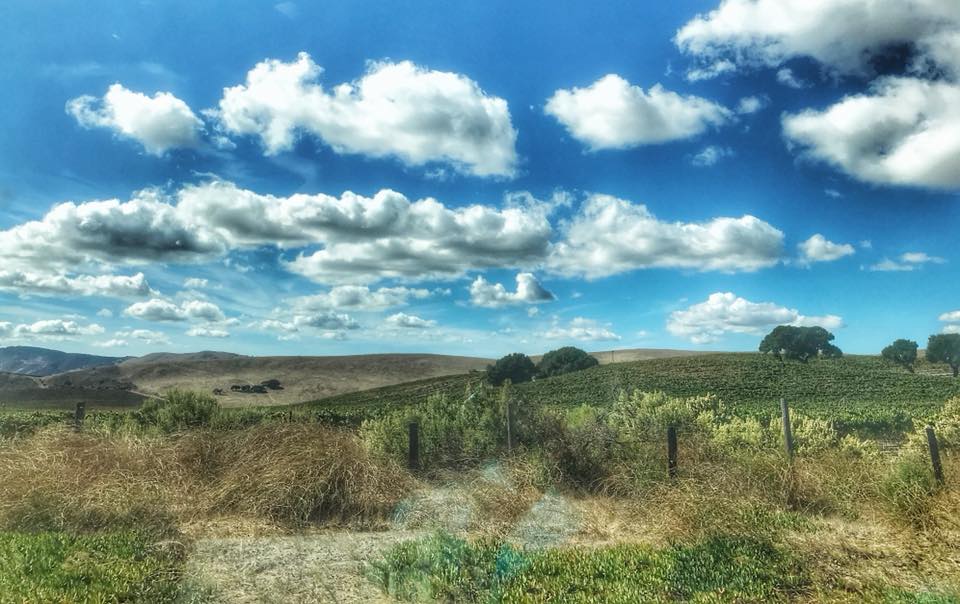
Photograph “Blistery blustery beautiful day” by Dallis Day Richardson
God,
I want to see you
in each person I meet today
in each conversation I have with another
in each joy discovered
in each suffering shared.
I want to know
in my inmost being
the humanity of Jesus
whose constant prayer was
to be intimately connected with you
in the doing of justice
the enactment of peace
the power of sacrificial love.
I want to seek
friendship with the divine
more than right beliefs
dutiful virtues
or accepted behaviors
so that the movement of my soul
might be toward life in its fullness
life in touch with the Center
life contributing to newness
life in communion with others
life as holy gift
life as sheer wonder.
May I embody
what to me is true
what to me is beautiful
what to me is eternal –
a life whose wholeness is found in God,
a song that can only be sung
in concert with all of creation!
God who watches over our world,
who companions us along life’s way,
who breathes life into our lives,
we come to lift our praise-filled voices,
to utter our heart’s trembling cries,
to be still, and to know,
to be struck again by the audacity of divine love.
Jesus, Lamb of God,
the one in whom we see love most freely given,
the one who is Rabbi, healer, and friend,
this Jesus invites us to open our eyes
and look with compassion on the needs of the world –
needs for basic necessities of food and shelter,
adequate health care and clean water,
needs for spiritual nourishment and hope,
a cup of life-restoring water,
needs for community and solidarity,
bridging differences with other children of God.
Jesus, the Christ of love’s kingdom,
in whom broken places are mended
and neighbors find common cause healing the world,
this Jesus invites us to open our ears
and hear the summons to follow –
following the Master’s voice,
becoming people brimming with holy grace,
following to places where our comforts are put aside
by the one who disturbs the status quo,
following the call to reshape the world around us
by going where Christ’s love and footsteps show.
Spirit of love, holy wind, breath of life,
replenish our spirits and claim us anew.
Grant us the strength we need
to break down walls of injustice,
to speak up for those on the margins,
to stand with all who are suffering,
to follow all the way to the cross, no turning back.
Spirit of truth, holy word of life,
charge us with a mission of mercy,
a partnership of peace,
that we might more fully live
into your vision of wholeness & shalom.
May your Church,
Creator, Christ, and holy wind,
be faithful in service,
courageous in witness,
steady in fighting injustice,
loyal in our allegiance to the gospel,
savvy in confronting evil,
persistent in walking the path of peace,
and above all,
loving in our actions toward friend and foe.
Bless this earthly home with protection and care.
Bless your people with resurrection power.
Bless decision-makers with a compassionate wisdom,
journalists with the boldness of truth,
and citizens with boundless energy
in the pursuit of the common good.
We pray all of this in the name of Jesus,
who pronounces blessings upon anyone seeking
to align their lives with your kingdom of love. Amen.
You are master sculptor of imposing mountain ranges,
rugged seascapes, luxuriant valleys, bubbling volcanoes.
You give thought to the birds of the air,
the cattle on the hill, the sea creatures and crawling things.
You orchestrate the sights and sounds of creation
to be a harmonious symphonic masterpiece
that all might know the abundance of your goodness.
There is no detail you leave unattended,
no part of this world beyond your concern.
And amazingly,
you are mindful of human beings –
made in your image,
made for relationship,
made of dust and water,
made of breath and hope,
made of dreams for becoming,
made to live at peace,
made to create,
made with a spark of divinity,
made with a twinkle in your eye,
made to hold and to heal,
made to trust,
made from a deep abiding love.
Our burdens begin
when we misplace our mindfulness of you.
Anxieties follow
when we forget who it is who holds our lives.
Troubles mount
when we boast that this is all meant for us.
Sorrows breed
when we ignore what you intend for our wholeness.
Heal us.
Shake us from our complacency.
Renew in us a vision of life’s harmony.
Restore in us a thriving hopefulness.
Stir up in us a righteous anger at injustice.
Prevent us from doing any more harm.
Call forth from us what is beautiful and true.
Lead us back to our sacredness.
Heal us, we pray, that we might be healers too.
When our days feel precarious,
and our hearts are worn down
with the fatigue of worry,
the unsettledness of concern,
your promise, O God, remains with us.
Indeed it resides within us,
burning at the center of our beings,
a flame of hope that will not be extinguished.
You are always leading us into the new.
You are continually remaking us
into a people formed in your love.
You invite us each morning to yield our hearts
to the work of justice, peace, and reconciliation.
In all times, you call forth our better angels.
Give us, we pray, the grace we need for this day
as we rise to meet the challenges before us.
May we live today from our deepest humanity,
granting to a neighbor the gift of humble listening,
extending to a stranger a smile of recognition,
offering to the other a gesture of welcome,
being gentle with ourselves and those near to us.
The little things are the big things in your realm.
The least are not forgotten,
the last become first,
the lost are surely found.
So help us believe that even the mustard seed
of our small faith makes a difference.
Let us not grow weary in doing good.
Let us rise to meet this day knowing
that your promise remains with us and within us,
indeed it burns with a hope that will not go out.
(Originally preached on Christmas Eve 2015 in Santa Barbara, CA)
The world has had a rough year! I suppose that could be said of any year, but there seems to be a heavier sense of worry and fear in the air these days for reasons we all understand. Parents may sense a greater burden when the world feels like it’s going off the tracks. All of us feel the burden though – grandparents, aunts, uncles, teachers, first responders, counselors, health care providers – all of the adults who care about the generations being raised in today’s world.
Fear is being hyped these days. It’s being bottled and sold on the political trail along with sides of protectionism and militarism masquerading as patriotic fervor. That’s not to say there’s no basis for the fear, only that the escalating rhetoric benefits the ones using it more than it does the public good. Tough talk lets people feel safer in the short term but doesn’t significantly change anything for the better.
The prophet Isaiah wrote during a time of national chaos and despair. In fact, things were about as bad as they could get for those living in the kingdom of Judah. In the midst of geo-political upheaval and shifting alliances in the Middle East, King Ahaz refused to listen to the counsel of the prophet Isaiah who offered him a word promising God’s deliverance from their aggressive neighboring kingdoms. The resulting destruction of Damascus, annexation of large portions of Israel, and deportation of much of the population forms the backdrop of darkness Isaiah describes at the beginning of chapter 9.
The light of the nation had grown dim. It was not just King Ahaz who had chosen this path of destruction; it was the people themselves who were looking for easy solutions to their fears without stopping to listen to the God who had rescued them before. It was the people themselves who had opted for darkness – the darkness of warfare, violence, oppression, and inhumanity. Darkness describes those times when we do not allow the better angels of our nature to come out.
The psalmist, in perhaps the most familiar poetry in scripture, describes darkness as the “shadow of death” (Psalm 23:4). “Even though I walk through the darkest valley,” the psalmist reassures, “I fear no evil; for you are with me.”
We long to be in that state of grace that would enable us to face all of the challenges of life and the troubles of this world without fear, knowing that God remains near. We long also, I believe, for an end to the violence and conflict that touches us not just on an international scale, but much closer to home, and sometimes tragically even within people’s homes. We long for the light of God’s peace to spread throughout the communities and nations in which we live.
Sometimes it is difficult to relate the message of scripture, written in a different time, in ways that will be fruitful and relevant to our lives. Isaiah spoke to a people who had been mired in dark times, their freedoms under threat, their spirits troubled, and he said that God had not given up on them, that God had already broken the yoke of their oppressor.
The people who walked in darkness
have seen a great light;
those who lived in a land of deep darkness –
on them light has shined. (Isaiah 9:2)
As we gather around the manger, we come to embrace the child of the light! With hearts that ache for this world, with hearts longing for peace, with hearts open to the healing word of God, we come and kneel before the holy child of Bethlehem.
Indeed this is the sign offered by the prophet Isaiah that a new divinely inspired dominion is upon us:
For a child has been born for us,
a son given to us;
authority rests upon his shoulders;
and he is named
Wonderful Counselor, Mighty God,
Everlasting Father, Prince of Peace.
His authority shall grow continually,
and there shall be endless peace
for the throne of David and his kingdom.
He will establish and uphold it
with justice and with righteousness
for this time onward and forevermore. (Isaiah 9:6-7)
Stephen Boyd comments, “In the face of the fear, even terror, it is tempting to put our trust in the powerful – those who, seeking their own interests, promise to protect us. In this, our own darkness, Isaiah poses the questions: Will we make room for the Prince of Peace, who orders the world with justice and righteousness? Will we prepare to follow him in peacemaking?”[i]
At Christmas, kneel before the Christ Child who is the very light of God. Poet Ann Weems, in her poem “The World Still Knows,” leads us to the manger with these words:
The night is still dark
and a procession of Herods still terrorize the earth,
killing the children to stay in power.
The world still knows its Herods,
but it also still knows men and women
who pack their dreams safely in their hearts
and set off toward Bethlehem,
faithful against all odds,
undeterred by fatigue or rejection,
to kneel to a child.
And the world still knows those persons
wise enough
to follow a star,
those who do not consider themselves too intelligent
too powerful
too wealthy
to kneel to a child.
And the world still knows those hearts so humble
that they’re ready
to hear the word of a song
and to leave what they have, to go
to kneel to a child.
The night is still dark,
but by the light of the star,
even today
we can still see
to kneel to a child.[ii]
Let us pray:
God of all ages,
in the birth of Christ
your boundless love for your people
shattered the power of darkness.
Be born in us with that same love and light,
that our song may blend with all the choirs of heaven and earth
to the glory of your holy name. Amen.[iii]
Words (c) 2015 Mark Lloyd Richardson (except where noted)
[i] Stephen B. Boyd, “Theological Perspective,” in Feasting on the Word, Year C, Volume 1, eds. David L. Bartlett and Barbara Brown Taylor, Louisville, KY: Westminster John Knox Press, 2009, p. 102.
[ii] Ann Weems, Kneeling in Bethlehem, Philadelphia: The Westminster Press, 1980, p. 55.
[iii] The Revised Common Lectionary website, Year C – Christmas, Nativity of the Lord – Proper I (December 24, 2015), Vanderbilt Divinity Library.
What was spoken through the prophet is fulfilled: Look! A virgin will become pregnant and give birth to a son, and they will call him, Emmanuel. (Emmanuel means “God with us.”)
In bomb-shattered cities
children unable to play freely in the streets
In poverty-wracked slums
families struggling to put food on the table
In violence-plagued neighborhoods
the young learning early that life is cheap
On tear-soaked refugee trails
people desperately looking for a way to freedom
On vulnerable island shores
communities fighting the futile battle against rising sea levels
In the midst of everyday pain,
in the grip of widespread suffering,
the promised one comes and takes up residence among us.
Emmanuel – God with us in our deepest need.
There is no one left out of this divine scheme,
no one whose accident of birth disqualifies them,
no one whose skin color lessens their sacred worth,
no one whose race or gender changes their standing before God,
no one whose religion or lack thereof alters God’s affection for them.
God’s concern is with the whole.
God’s dream is that we all will one day see:
What affects one affects all.
Injustice anywhere is injustice everywhere.
Suffering is never isolated or contained.
We weep with those who weep,
our tears mingling with the tears of divine compassion.
God with us—
the whole human race,
the whole soul-stirring creation,
the whole beguiling mystery of what it means to be alive.
God with us—
in our search for wholeness,
in our poverty of spirit,
in our labor for peace with justice,
in our reaching out with hearts and hands to help,
in our holding on tenaciously to hope.
From the rising of the sun to its setting
the name of the Lord is to be praised.
~ Psalm 113:3
The posture of praise
begins with eyes turned toward the sun.
This glimmering star was there
the day the world was born.
It was there as our first parents walked in the garden
as creatures of all variety came into existence
as nations and peoples were formed.
This star warms us
guides us
keeps us
like the one who placed it there.
From the rising of the sun to its setting
the name of the Lord is to be praised.
Morning praise
awakens us to life’s sweetness
celebrates the gift of being
honors deep relationship.
Noontime praise
walks in the light of love
seeks justice
longs for peace.
Evening praise
gives thanks for a day made holy
surrenders to life’s brief tenderness
drinks from the wellspring of hope that never runs dry.
From the rising of the sun to its setting
the name of the Lord is to be praised.
Words (c) 2015 Mark Lloyd Richardson
Photo credit: Dallis Day Richardson
Having participated in an Interfaith Prayer Vigil for Peace today in Santa Barbara, and seeing the wonderful involvement of persons from many religious traditions, I was reminded of a prayer I wrote several years ago.
A Planetary Prayer
In a world aching to be healed,
among nations longing for peace,
on a planet wealthy in resources,
in a time ripe for change,
for a dream greater than us all,
with divine aims to guide us,
we dare to face this day with hope.
Power higher than the heavens,
Song sweeter than the birds’,
Strength more enduring than the hills,
Peace more resilient than discord,
Passion breathing life into our lives,
Presence both fierce and tender,
keep us ever in love with you,
with one another,
and with creatures great and small,
so that our labors for justice
on this fragile, swirling planet
may bear the fruit of wholeness,
as you call us forever forward
into a new and brighter day.



 God who watches over our world,




 dreamprayact